


Beyond the Robot: Four Capabilities That Define Successful Brownfield Automation
Guest blog by MHI member ForwardX Robotics
Brownfield automation is rarely limited by robot technology. The harder task is to fit automation into a factory that is already running. Existing layouts, production processes, traffic, equipment, and IT systems all shape what can be deployed and how.
Success therefore depends on more than robot performance. Manufacturers need a complete systems view, an adaptable design, a production-safe deployment method, and a way to coordinate the fleet at scale. These four capabilities help turn individual automation projects into reliable factory operations.
1. Understand the factory as a complete system
A brownfield project should not start with the robot. It should start with the way the factory operates. Material movement is connected to production flow, equipment utilization, inventory, IT systems, and operational continuity. A change in one area can create a bottleneck in another.
Before selecting a solution, the project team should assess the operating environment. This includes material flows, production constraints, traffic patterns, IT and operational technology architecture, and the planned deployment sequence. The assessment should identify bottlenecks and opportunities for automation.
This systems view changes the main design question. Instead of asking whether a robot can complete a transport task, the team asks whether the automated process can support production as a whole. That distinction is important in a live factory, where local improvements can have wider operational effects.
Manufacturers should therefore evaluate more than navigation or vehicle specifications. They should also consider the supplier’s ability to analyze material flow, engineer traffic, integrate IT and operational systems, and plan deployment before robots enter production.
In practice, the assessment should guide solution design. It should show where automation can remove a bottleneck, where existing constraints must be preserved, and where changes could affect production continuity. This creates a stronger basis for selecting robot types, defining interfaces, and planning implementation.
2. Adapt the solution to existing conditions
No two brownfield factories are identical. Floor conditions, aisle widths, traffic patterns, material carriers, network infrastructure, and production layouts vary from site to site. A standardized design cannot simply be placed into every facility without adjustment.
Successful brownfield automation depends on engineering adaptability. The solution should work with the factory’s operating conditions while maintaining safety, flexibility, and production continuity. It should not require the entire facility to conform to a fixed automation model.
Navigation is one part of this decision. Vision-based navigation does not depend on floor markers or magnetic guidance. It can therefore reduce the need for infrastructure changes. In mixed-traffic areas, perception, dynamic obstacle avoidance, and coordinated traffic management help autonomous and manually driven vehicles operate in the same environment.
Adaptability also extends beyond navigation. Robot architecture, payload, software integration, and deployment strategy should match the process. The aim is to standardize the automation around the factory’s requirements, rather than standardize the factory around one type of robot.
3. Use a production-safe deployment method
Deploying automation in an operating factory is different from installing equipment in a greenfield facility. Production is already under way. Existing equipment and manufacturing schedules must continue to function throughout the project. Even a small integration issue can cause delays or downtime.
For this reason, deployment method matters as much as technical capability. A structured approach should combine phased implementation, system validation, integration testing, and controlled production cutover. Each step reduces risk before the next part of the operation goes live.
Software interfaces and business workflows should be verified before robots enter live production. This includes communication with manufacturing execution, warehouse management, enterprise resource planning, and other factory systems. Testing should confirm that the systems work together from end to end.
A dedicated test environment can support this work before live cutover. The objective is to verify both the technical interfaces and the business logic behind each workflow. The project should confirm that connected systems and end-to-end processes perform as designed.
Cutover should take place only after that validation is complete. Progressive commissioning can then bring production areas, fleet capacity, and logistics workflows online in controlled stages. This approach limits operational exposure and helps maintain production continuity during deployment.
4. Coordinate the fleet as one operating system
Managing a large fleet at one site is not the same as deploying small, independent fleets across several facilities. At single-site scale, many vehicles share routes, work areas, charging resources, and production priorities. They must operate as one coordinated logistics system.
Manufacturers should therefore look beyond the total number of robots deployed. The more important question is how those robots are managed. Factory-wide automation needs a unified software architecture that can coordinate different robot types, production workflows, and enterprise systems.
This becomes more important as the range of tasks expands. Pallet transport, cart towing, heavy-load movement, and line-side delivery may require different vehicle architectures. If each group operates through a separate control system, the factory can gain robots while losing a unified view of logistics.
A common operating logic, dispatch engine, communication protocol, and fleet intelligence layer allow different vehicles to work as one system. This shared architecture supports traffic management, dynamic task allocation, charger optimization, real-time fleet visibility, and coordination across the factory.
Evaluate the capabilities behind the technology
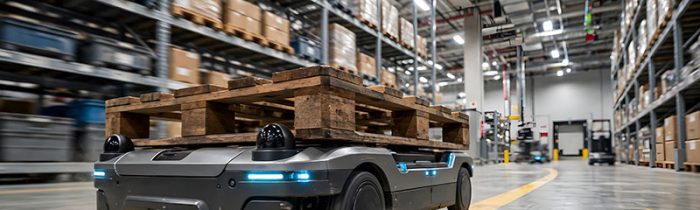
The robot is the most visible part of a brownfield automation project, but it is not the only factor that determines success. Manufacturers should assess the capabilities behind the technology. The project should begin with a complete view of the factory, adapt to existing conditions, protect production during deployment, and coordinate the fleet through a unified architecture.
These capabilities address the risks that are often hidden in layouts, workflows, traffic patterns, system interfaces, and production constraints. When they are handled as part of one engineering approach, automation can improve intralogistics without creating unnecessary disruption or complexity.
A practical evaluation should return to four questions. Does the project begin with a complete view of factory operations? Can the design adapt to existing conditions? Is deployment structured around validation and production continuity? Can one architecture coordinate the fleet as it grows?
Brownfield automation succeeds when technology becomes part of a resilient operating system rather than another isolated layer of equipment. The robot may be the most visible component, but the less visible disciplines around it determine whether automation delivers sustained value.

