



The Safety-Efficiency Paradox
Why Operational Reliability is Your Strongest Competitive Advantage
Guest blog by MHI member Tele Radio America, LLC
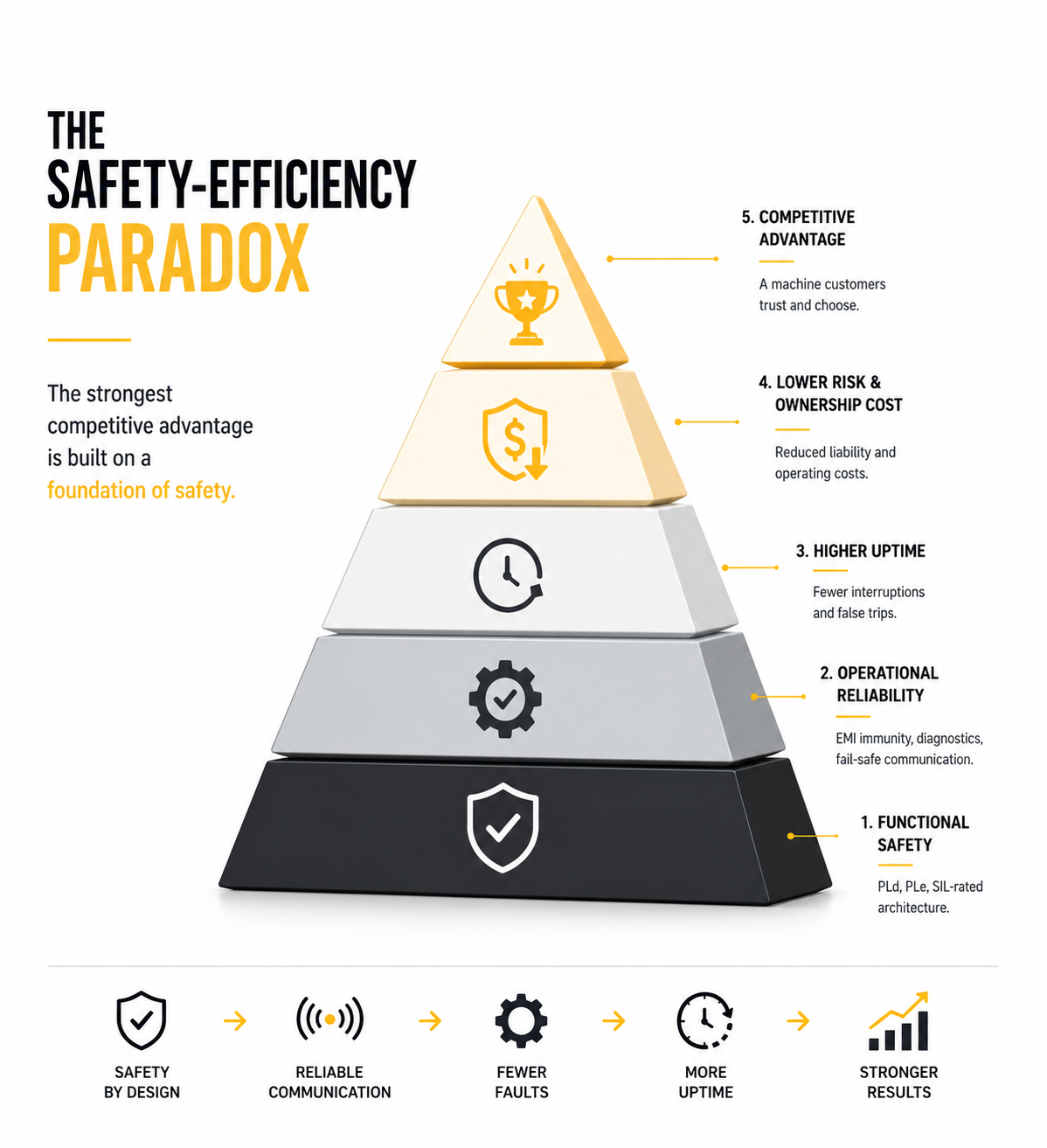
In the competitive landscape of industrial machinery, engineering teams often perceive safety and compliance as a design “tax”—a mandatory hurdle to clear before a machine can hit the market.
However, the most successful OEMs have moved beyond this view. They have discovered that designing for high-integrity safety is not a cost center; it is a powerful design feature that drives machine uptime, reduces liability, and streamlines market entry. This is the “Safety-Efficiency Paradox”: by prioritizing robust control architecture from the start, you actually build a faster, more reliable, and more profitable machine.
Beyond the E-Stop: True Operational Reliability
Many integrators mistake the presence of a standard emergency stop button for a complete safety strategy. True reliability, however, is architectural. It involves the dynamic, real-time monitoring of signal integrity, rejection of heavy electromagnetic interference (EMI), and fail-safe system logic.
When safety is treated as an afterthought—or “band-aided” onto a machine’s architecture after the core design is finished—it inevitably leads to complexity. This creates a cascade of increased wiring, diagnostic hurdles, and potential for false trips that kill machine productivity. When high-integrity communication is integrated as a core pillar of the design, the system becomes more intelligent and significantly more reliable, not more cumbersome.
The Passport to Growth: Compliance as a Standard
For U.S.-based OEMs, navigating ANSI standards and OSHA requirements is part of the development lifecycle. But when your control platform is built to the highest global safety standards, you eliminate the friction of localized re-engineering.
Whether your machines are staying in the U.S. or expanding into global markets, using a pre-certified, safety-rated control platform provides a universal “passport.” It ensures that your integration strategy isn’t just “compliant” by a narrow margin, but structurally robust enough to meet the most demanding requirements across any territory. This reduces the need for expensive, region-specific design variants and simplifies your internal documentation and testing cycles.
Safety as a Value Proposition
A machine that is demonstrably robust and reliable is a machine that sells. For end-users—particularly in sectors like material handling, lifting, and heavy logistics—the cost of an unexpected shutdown far outweighs the initial price of the equipment.
By delivering a machine with high-integrity wireless controls, you aren’t just selling an appliance; you are selling risk mitigation and operational continuity. This lowers the long-term insurance burden for your customers and establishes your brand as a premium, trusted provider. In a market often saturated with low-cost, uncertified alternatives, structural reliability is the differentiator that commands a premium price point.
Avoiding the Integration Pitfalls
While robust system integration is a clear competitive advantage, the path to implementation is not without its traps. Even with the best intentions, subtle integration errors can inadvertently undermine the performance architecture you have worked so hard to build.
To help your team audit your current design strategy and ensure that your integration is built to deliver long-term value, we have compiled an analysis of the five most common integration pitfalls encountered in the industry today.
Read: 5 Wireless Integration Mistakes Every OEM Should Avoid

