


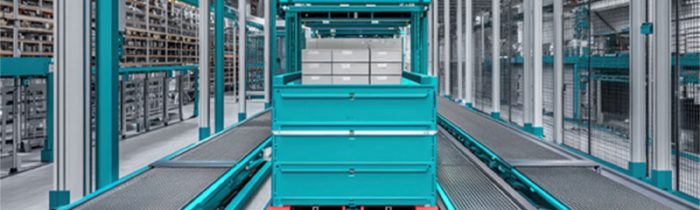
Why Choose Warehouse Automation for Modern Operations
Discover why warehouse automation is becoming essential for boosting efficiency, reducing labor costs, increasing accuracy, and enabling scalable growth in today’s supply chains.
Guest blog by MHI member Greenspace (Log-X Systems GmbH)
The modern warehouse industry is evolving rapidly, driven by the growth of e-commerce, labor shortages, and rising customer expectations. Manual processes, once sufficient, can no longer keep up with the speed and scale demanded by today’s supply chains. As a result, warehouse automation has become a critical strategy, helping businesses improve efficiency, accuracy, and scalability while reducing operational costs.
Addressing Labor Challenges
One of the biggest challenges facing warehouses today is the scarcity of skilled labor. Repetitive and physically demanding tasks, such as picking, sorting, and replenishment, can lead to fatigue and workplace injuries. Automation allows these high-volume tasks to be handled by machines, freeing employees to focus on higher-value work such as quality control, exception management, and complex order processing.
This not only reduces labor costs but also enhances workplace safety and employee satisfaction. Employees spend more time on meaningful work rather than repetitive manual tasks, which improves retention and productivity. In addition, automation helps companies maintain operational continuity during labor shortages or peak seasons, ensuring reliable service.
Consistent Performance and Reliability
Human operators are prone to errors and fatigue, which can disrupt workflow and slow down fulfillment. Automated systems provide consistent, predictable performance across all warehouse processes. Whether it’s picking, sorting, or storage, automation ensures that tasks are completed with accuracy and efficiency, even during peak periods.
For example, automated picking systems can maintain the same speed and precision for hours, reducing order delays and improving service quality. Reliable performance ensures that warehouses can meet customer expectations consistently while minimizing costly mistakes.
Enhanced Accuracy Builds Customer Trust
Manual processes are prone to mistakes, such as incorrect shipments, misplaced inventory, and delayed orders. These errors can lead to returns, higher costs, and dissatisfied customers. Automation reduces these risks by integrating warehouse management systems (WMS) with automated picking, sorting, and scanning technologies.
Accurate operations lead to higher order fulfillment rates, fewer returns, and improved customer satisfaction. Over time, this reliability strengthens trust and loyalty, which is crucial in competitive markets. Companies that implement automation often see a measurable reduction in errors, boosting both operational efficiency and customer confidence.
Scalable and Flexible Systems
Warehouse automation is highly modular and scalable, allowing businesses to expand operations without disrupting existing processes. Whether handling seasonal surges, new product lines, or facility expansions, automation adapts to evolving business needs.
Modern systems can integrate with other technologies, such as ASRS, conveyor systems, and robotics, creating a future-ready warehouse ecosystem. This flexibility ensures that automation remains a long-term, strategic investment that can support growth and evolving operational requirements.
Long-Term ROI and Efficiency Gains
Although automation requires upfront investment, the long-term benefits are substantial. Automation reduces labor costs, increases throughput, minimizes errors, and optimizes warehouse space. For example, implementing automated picking and sorting can increase order fulfillment speed by 50–70% while maintaining accuracy above 99%.
The resulting efficiencies accelerate ROI, making automation a cost-effective strategy for both current and future operations. Beyond direct financial benefits, automation also improves workflow predictability, resource utilization, and employee productivity, contributing to sustainable growth.
Conclusion
Choosing warehouse automation is no longer optional for businesses that want to stay competitive. By improving efficiency, accuracy, and scalability, automation transforms warehouse operations and enables long-term growth. Companies that adopt automation today gain a competitive edge, ensure operational reliability, and position themselves for success in a rapidly evolving supply chain landscape.

